





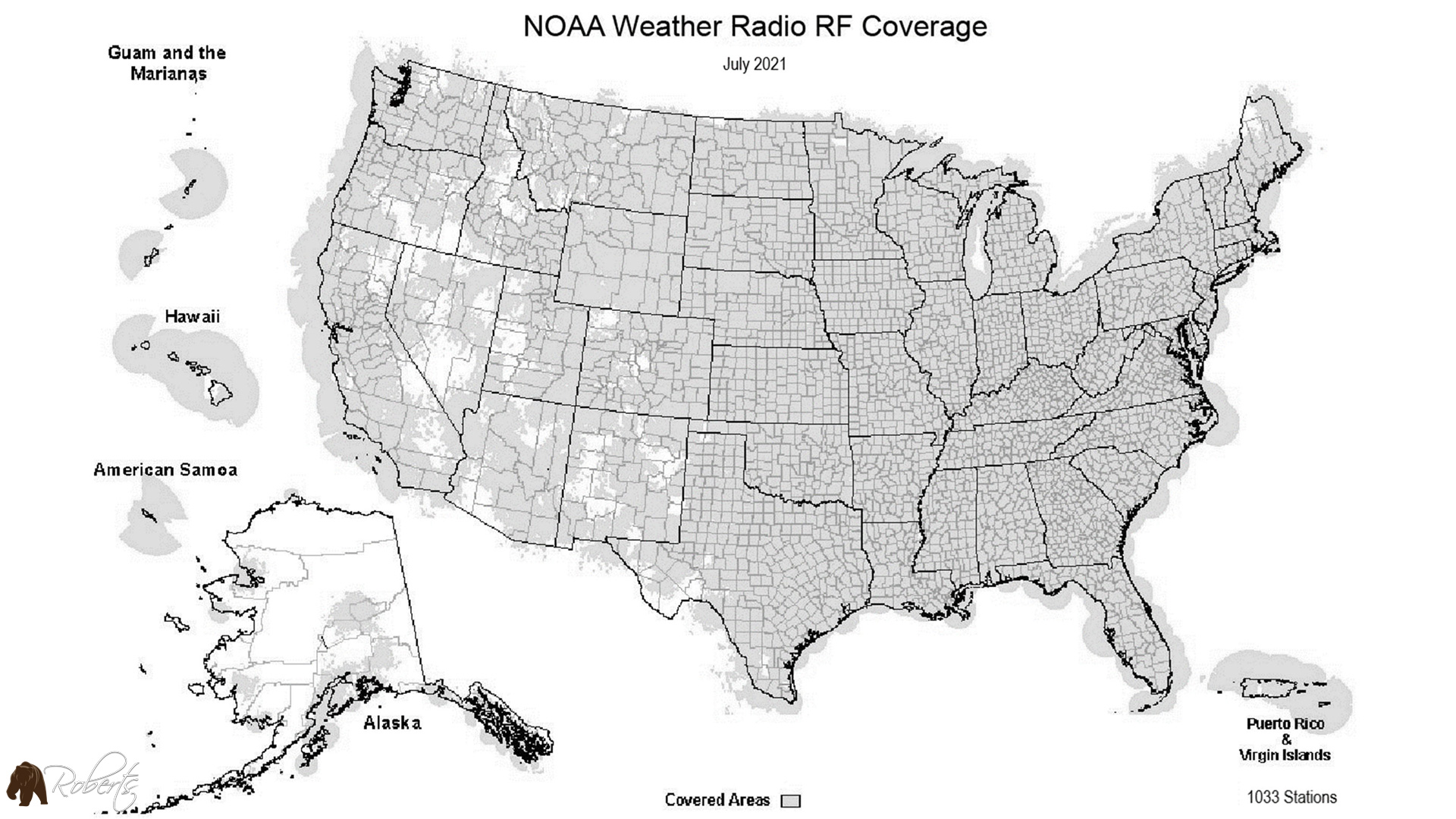
NOAA Weather Radio is one of the most reliable ways to receive real-time weather alerts, watches, and warnings. It operates on a nationwide network of radio transmitters that broadcast continuous weather information twenty four hours a day. For hikers, campers, hunters, and families who want dependable emergency communication, a weather radio is an invaluable tool.
How NOAA Weather Radio Works
Instead of standard FM, NOAA Weather Radio uses seven dedicated frequencies in the VHF band. These channels carry weather forecasts, storm updates, and immediate alert tones for severe weather or life threatening conditions. Because the system is supported by the National Weather Service, broadcasts continue even during power outages or network failures.
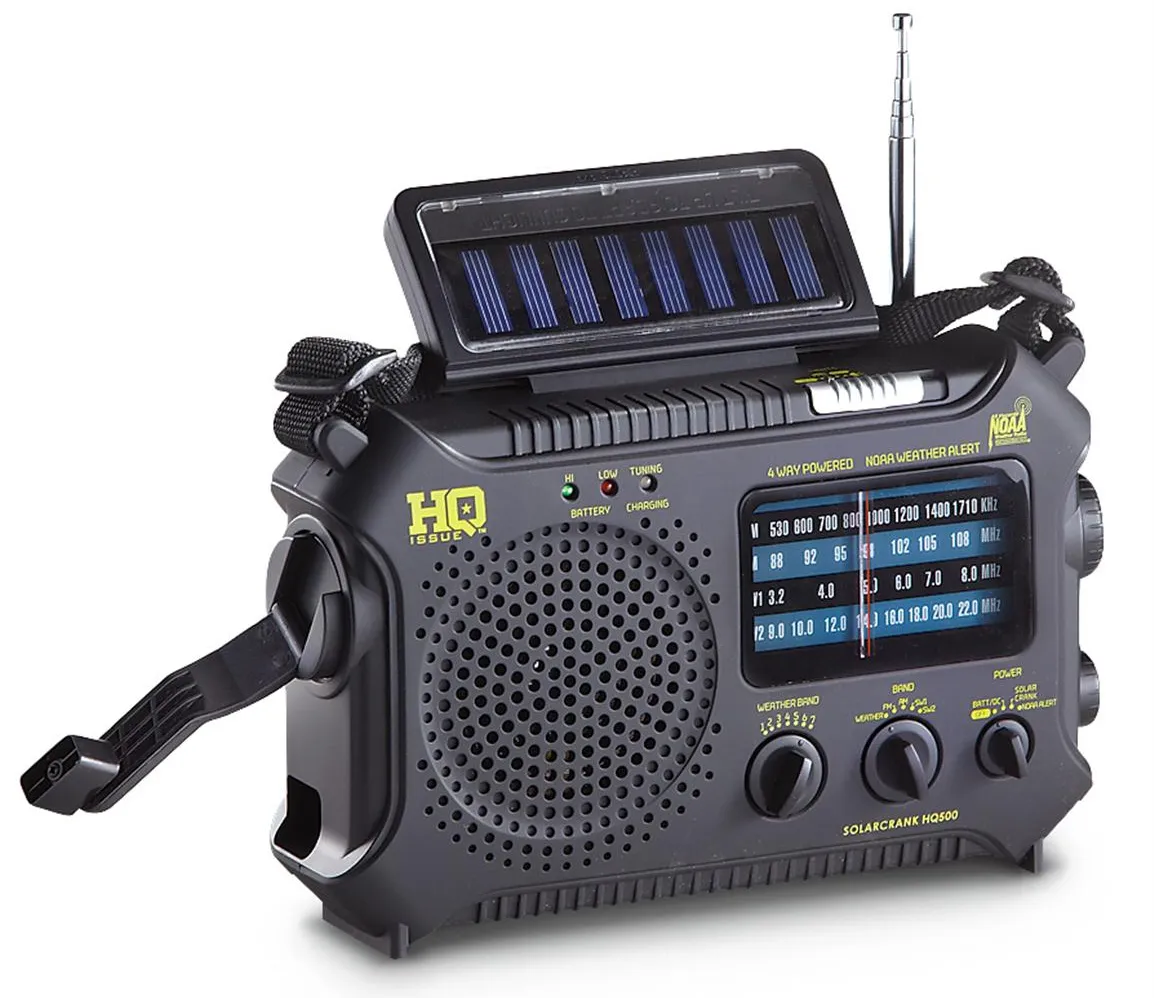
HQ ISSUE Multi-Band Dynamo / Solar Powered Weather Radio
NOAA Weather Radio Channels and Frequencies
Most weather radios list channels from 1 through 7. These channel numbers do not indicate priority. They simply correspond to specific broadcast frequencies. Selecting the strongest local signal gives you the clearest reception.
| NOAA Channel | Frequency (MHz) |
|---|---|
| Channel 1 | 162.400 |
| Channel 2 | 162.425 |
| Channel 3 | 162.450 |
| Channel 4 | 162.475 |
| Channel 5 | 162.500 |
| Channel 6 | 162.525 |
| Channel 7 | 162.550 |
Understanding Coverage and Reception
Coverage depends on terrain, distance from a transmitter, and the quality of your radio. Flat terrain usually allows signals to travel farther, while deep valleys, ridges, and heavy forest cover can weaken reception. Most NOAA transmitters cover a radius of forty to sixty miles, but conditions vary widely across the country.
For the best performance, test several NOAA channels and choose the one with the strongest and most consistent signal. If you frequently travel, hike, or camp across different regions, make it a habit to scan for the local broadcast each time you move into a new area.
What Are SAME Codes and Why They Matter
Specific Area Message Encoding (SAME) allows a weather radio to filter alerts so you receive warnings only for your chosen county or area. This prevents unnecessary alarms and ensures you receive the messages that apply directly to your location.
You can find SAME codes for every county in the United States on the National Weather Service website. Once your weather radio is programmed with the correct code, it will activate only when alerts are issued for that specific region.
North Carolina NOAA Weather Radio Coverage
North Carolina has excellent NOAA coverage, though reception varies near mountain valleys and coastal marshlands. Travelers and outdoorsmen moving between regions should plan to rescan channels as they transition from the mountains to the Piedmont or the coastal plain. Local stations provide continuous weather information, marine warnings, tropical updates, and severe storm alerts.
Why Every Family Should Have a NOAA Weather Radio
Cell phones are convenient, but they depend on towers, data networks, and power. A dedicated weather radio remains one of the most dependable alert systems available. It works during storms, outages, and emergencies when other communication systems become unreliable. Whether kept in a home, cabin, vehicle, or field pack, a weather radio is a simple tool that can deliver critical information when it matters most.