







I went on my first tundra swan hunt in eastern North Carolina, just outside Tarboro, and it’s an experience I’ll carry with me for the rest of my life.
Gear, Weather, and an Early Start
I packed my gear carefully: my original Benelli Super Black Eagle fitted with a Kick’s Industries High Flyer choke, multicam alpine snow camo (jacket, pants, and balaclava), Winchester Steel Xpert high-velocity steel shot, an Eagle Industries Yote pack, a North American Rescue Eagle IFAK, and my Danner USMC RAT boots.
I left the house around 4:00 a.m. The temperature was a warm 60 degrees, unusual for early January, but welcome. I picked up my son, Curry II, and we headed to meet our guide, Matthew Newton, from Final Destination Outfitters, at a local Bojangles.
Setting the Spread
After roll call, we followed Matthew to the designated field and parked our vehicles three by three. When volunteers were asked to help set up the swan and snow goose decoys, Curry II and I jumped at the chance.
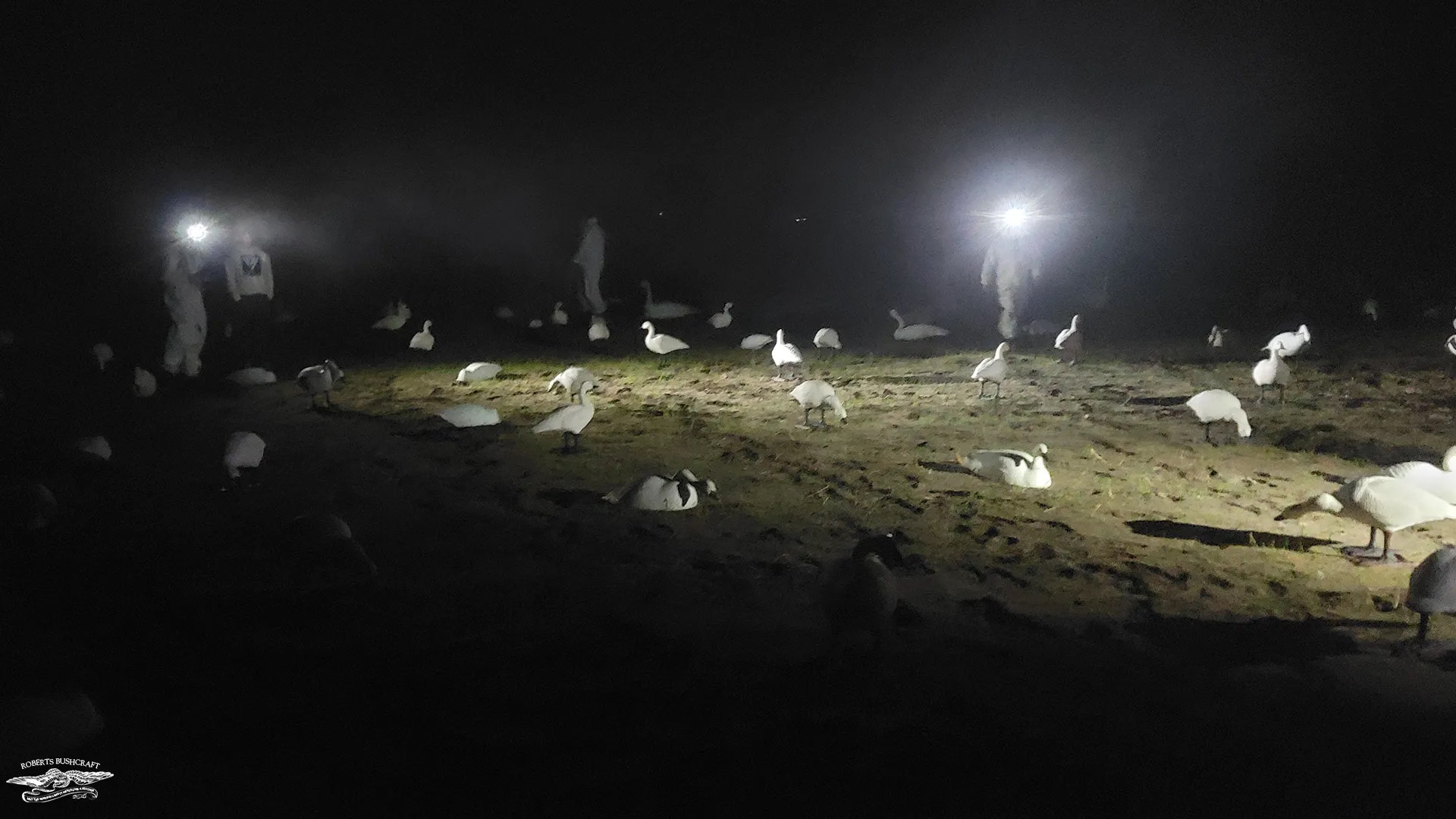
The decoys had to be assembled and placed about five to six feet apart in a large, strategic spread. It was still dark; headlamps and flashlights were indispensable. Once everything was set to Matthew’s satisfaction, we returned to the staging area.
The Rules of the Hunt
Matthew laid out the rules. They were simple, clear, and easy to follow:
- Wait for the call. Swans are massive birds, and their size can be deceptive. Shots were to be taken only once they were inside the decoy spread. Shoot only when he gives the order.
- Shoot the head. Lead them like doves, teal, or pigeons. If you see feathers, adjust and stay on the head.
- Keep shooting. Fire all three shells unless the first is a clean kill. Stay on your bird, one bird per hunter. If two hunters hit the same bird, show courtesy and give it to the other man. There will be more birds.
That was it.
Fog, Sunrise, and Swans
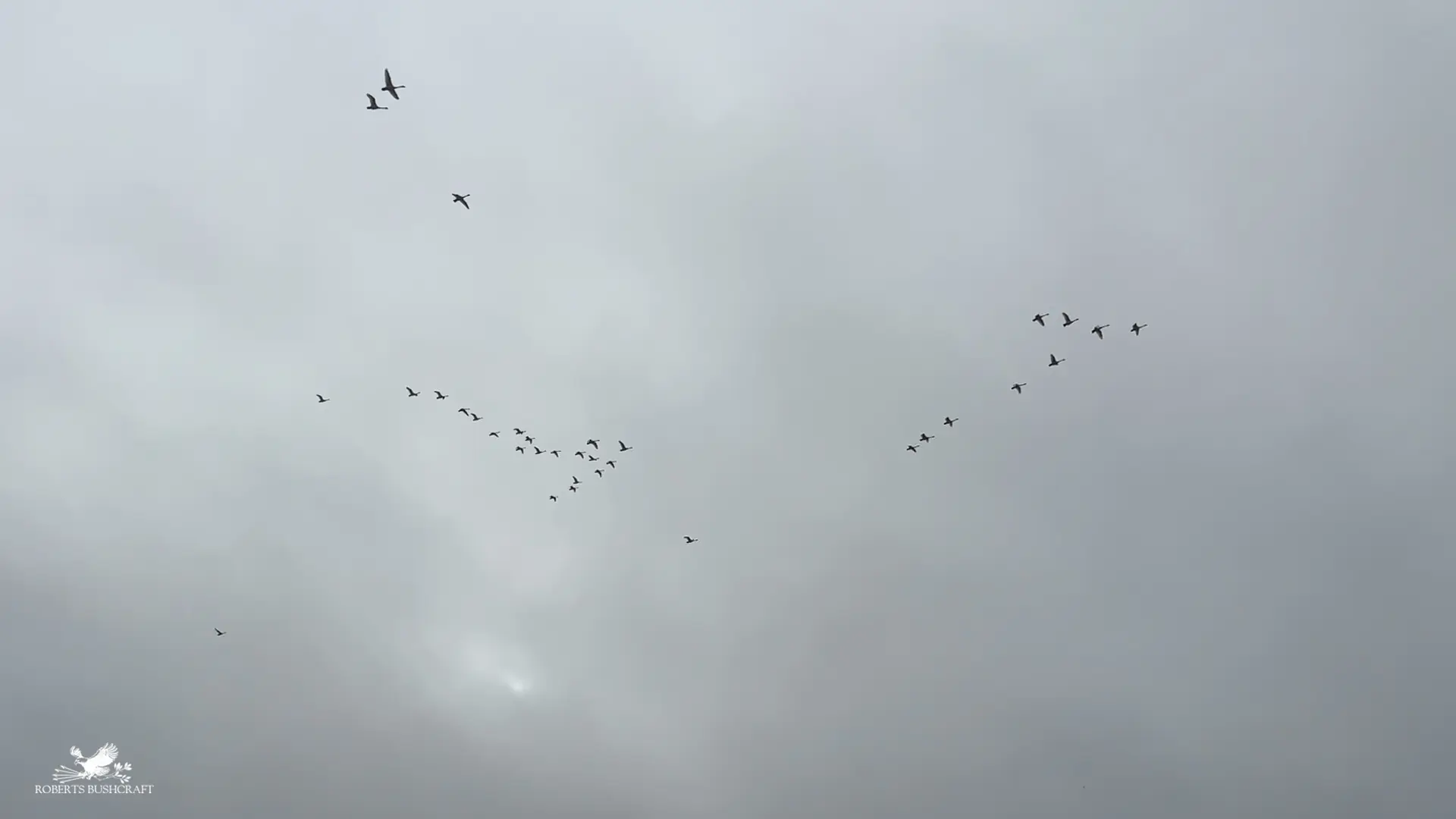
The first group of six hunters donned white Tyvek suits and took positions among the decoys before sunrise. The weather was peculiar: warm air and thick fog that limited visibility. The rest of us waited near the vehicles, talking with fellow hunters, and we had a chance to speak with the men from BOR Outdoors as the sky slowly brightened.
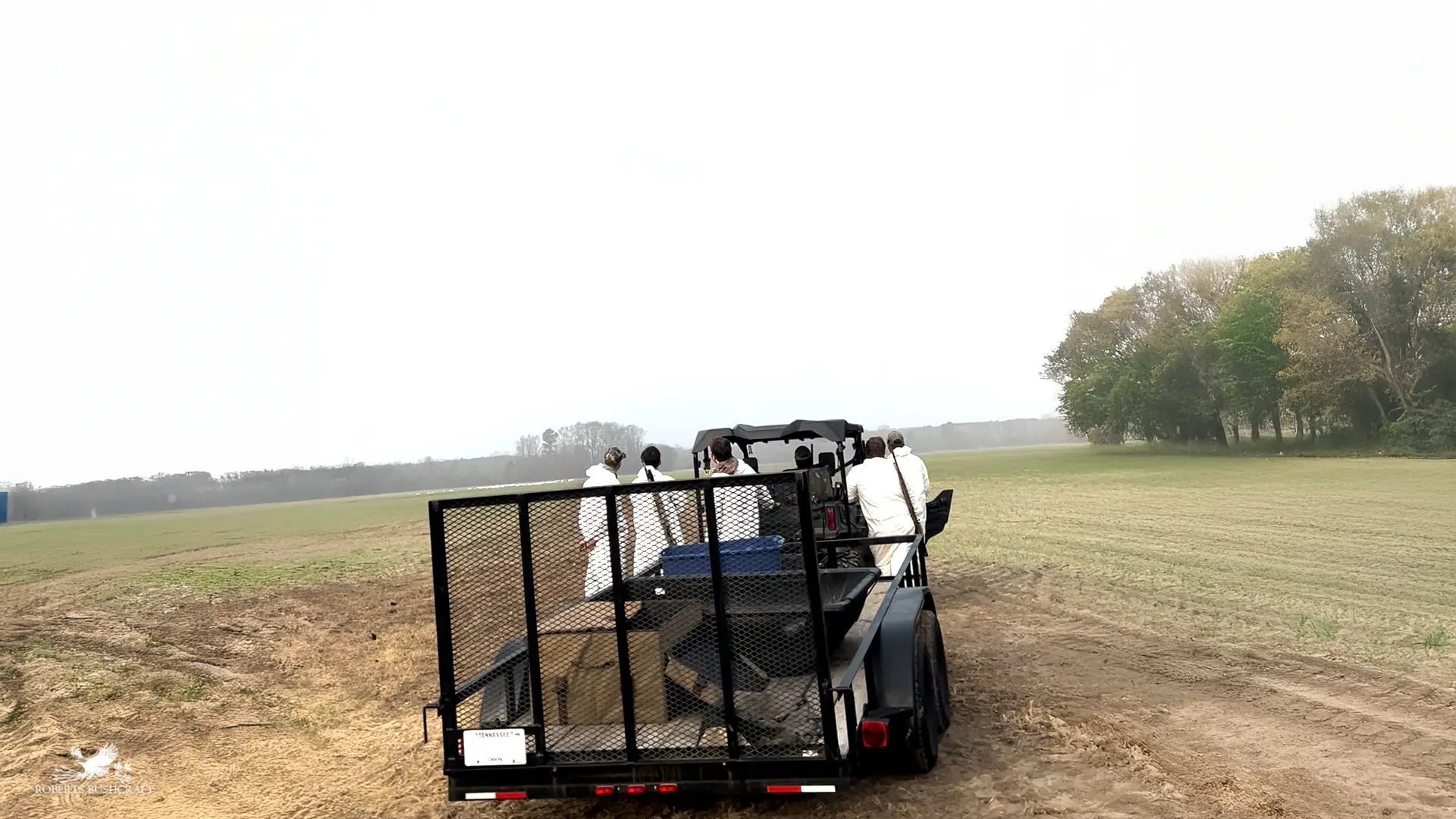
Sunrise came a little after 7:30 a.m., and before long, the fog began to burn off. Then the swans appeared; more than I had ever seen in my life. They flew overhead in steady lines, their calls echoing across the fields.
The guides called them in. They turned. Shots rang out. One group after another filled their limits, loaded birds onto the UTV, and returned to the staging area.
My Turn
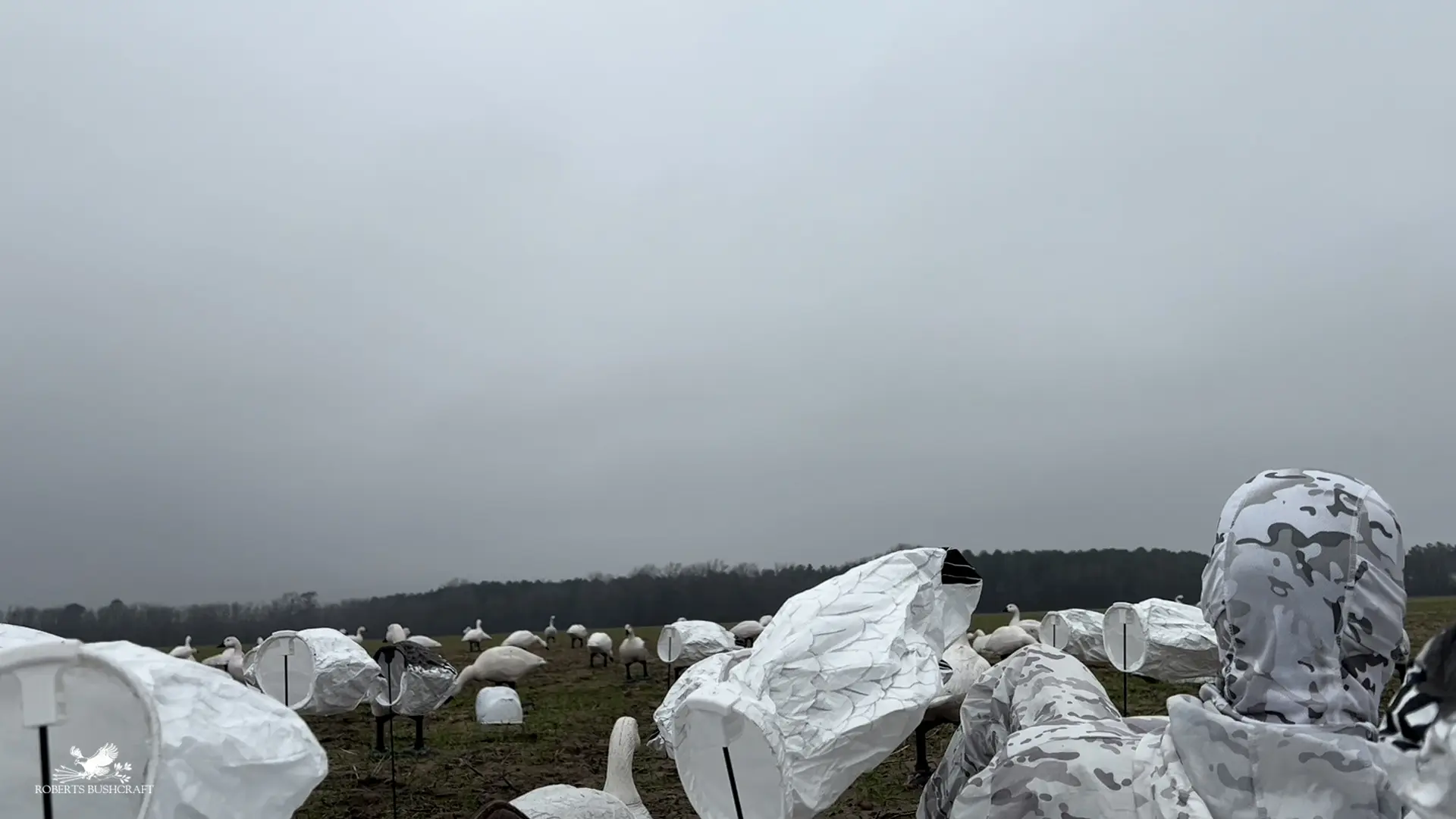
I was in the next-to-last group. Curry II and I rode with three other hunters down to the spread. We stepped off the UTV, moved quickly, and settled into position. I loaded the Benelli and waited. I was nervous, focused, my heart pounding. Take my word for it, I'm in the picture. Snow camo. It's hard to see.
Minutes later, swans appeared again. Matthew began to call. They turned and flew straight toward us. I remembered the rule: wait for the call.
“SHOOT! SHOOT! SHOOT!”
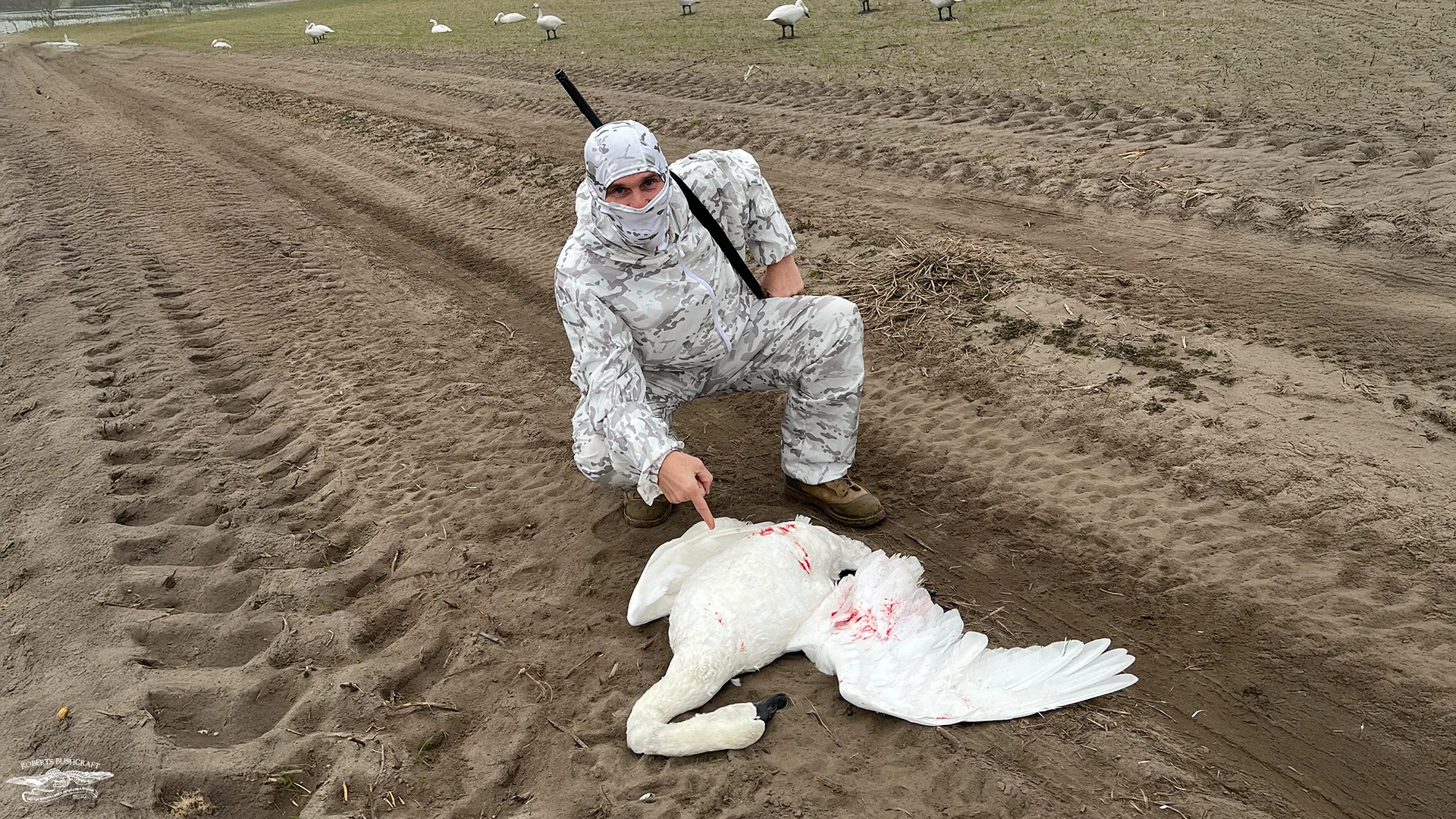
I hit my bird with the first shot; I believe the second finished him. My first swan!
Curry II was just as happy as I was. This hunt had been his Christmas gift to me, and it paid off in a way neither of us will ever forget.
A Hunt Done Right

The entire experience was top-notch. Guided hunts can be unpredictable with different personalities and different attitudes, but this group was something special. I didn’t hear a single vulgar word. No arguments over birds. Only “yes, sir,” “no, sir,” and “good job.”
There were older men, younger men, and even a boy about ten years old. It was professional, respectful, and deeply encouraging to witness.
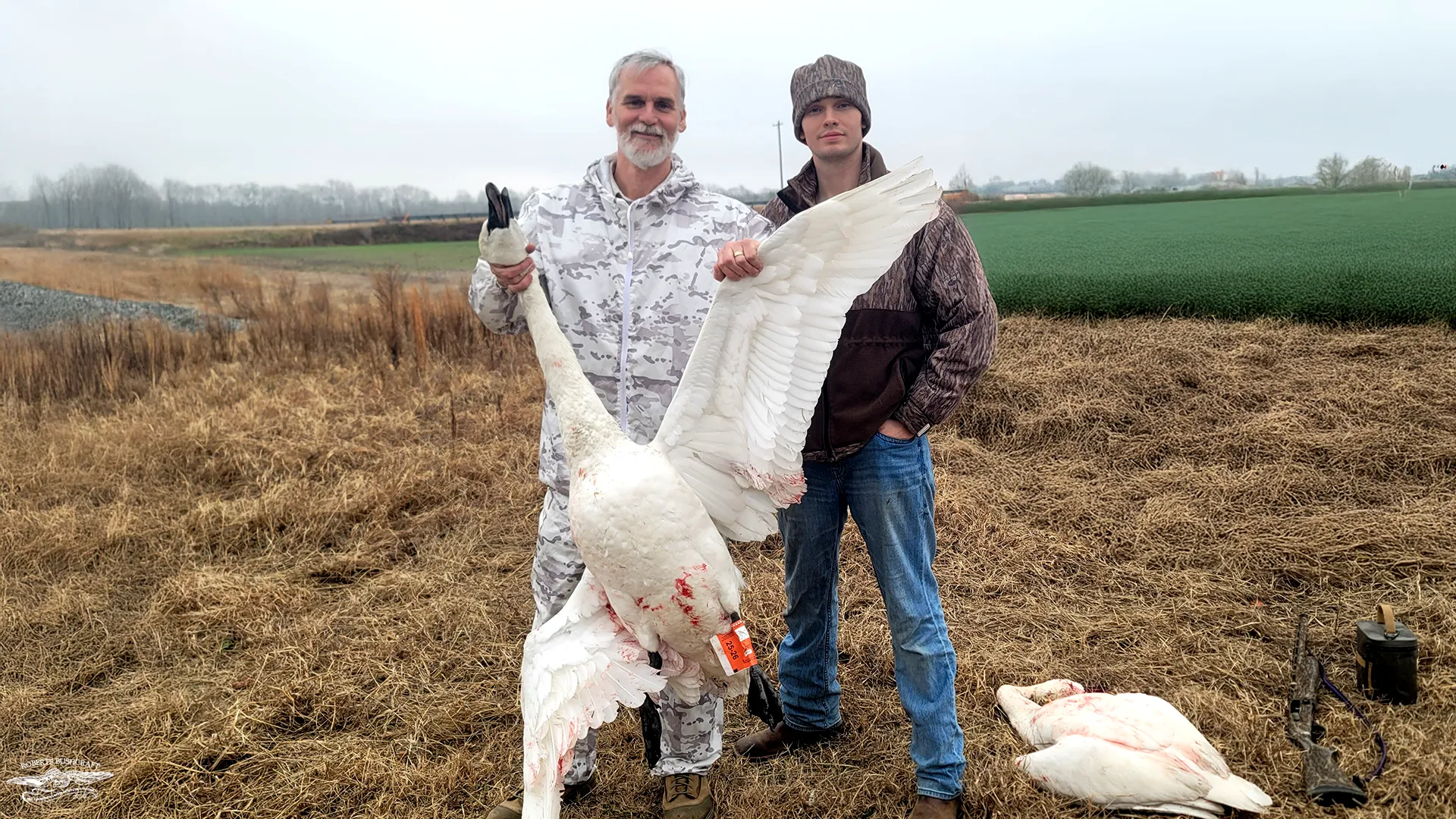
I got my swan. More importantly, my son gave me something far greater than a hunt; he gave me a memory, shared shoulder to shoulder in a warm North Carolina field, watching the sky fill with birds.
He took me hunting. That’s a gift I’ll never be able to thank him enough for.
Notes on the Hunt
- Guide: Final Destination Outfitters
- Video on the hunt: BOR Outdoors